Hr. Lind · Craft & personal style
A good moustache starts with knowing when to put the scissors down
Movember is a reason to grow a moustache. Shaping it takes more than patience. Barber Jimmy Lind explains why length along the upper lip and at the sides deserves careful attention.

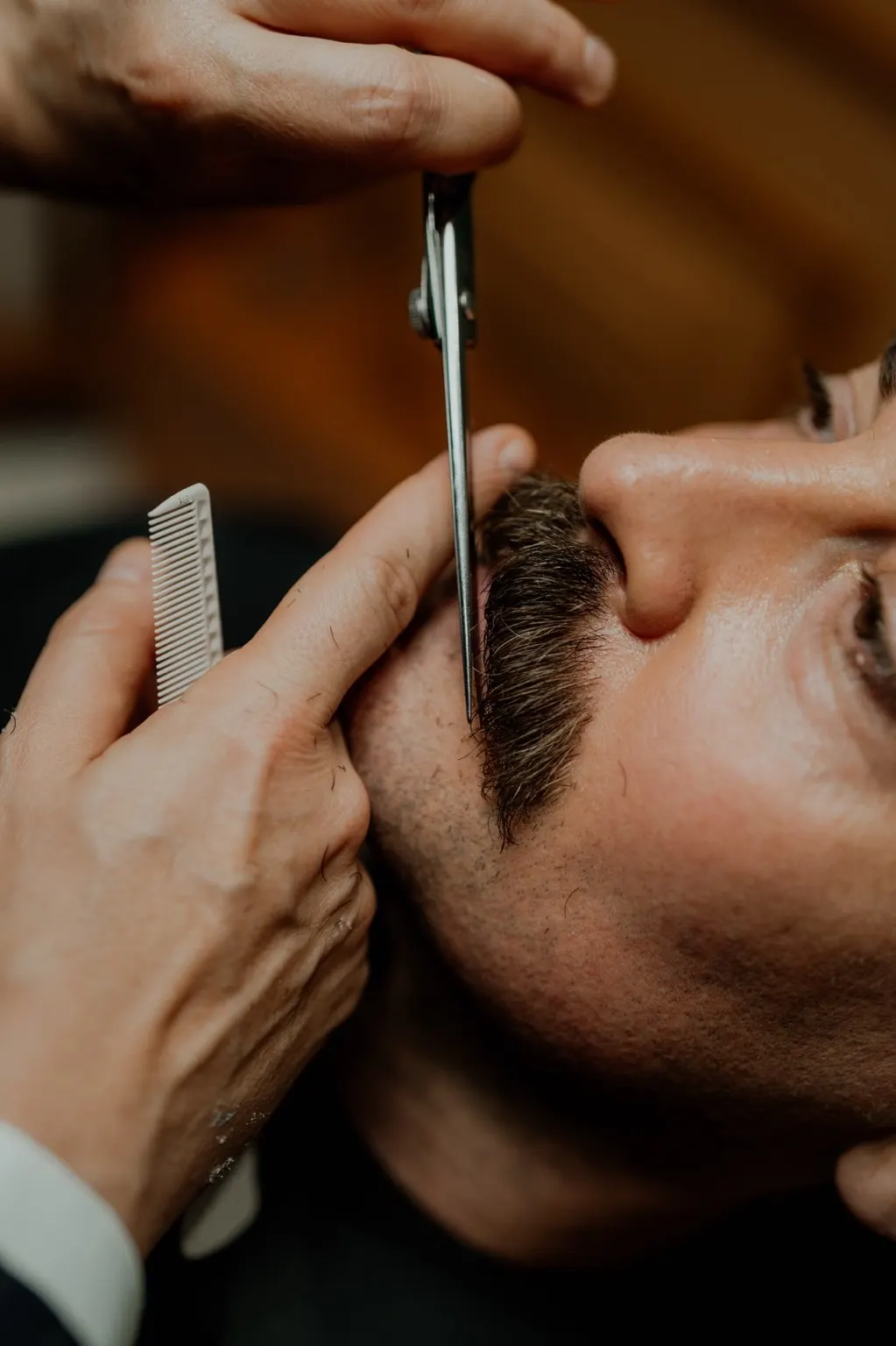
A few cuts along the upper lip can change the whole character of a moustache. Remove too much length and some of the fullness goes with it. At the sides, a quick trim can take away the tips that were meant to curl later.
That makes the first question a practical one: what should the finished moustache look like?
For Jimmy Lind, a professionally trained hairdresser and barber in Frederiksberg, the answer guides the cut. A short moustache following the upper lip needs a different approach from a full handlebar with curved tips. The aim is to preserve length where the final shape will need it.
November is a starting point
Movember gives the moustache a particular role in November. The organisation uses it as a symbol of its work in men’s health, focusing on mental health and suicide prevention, prostate cancer and testicular cancer. Read about Movember’s work.
For someone trying a new look, the month is a beginning. Growth may appear uneven in the first few weeks. A full moustache or long tips can take longer than November alone.
Lind’s advice is to choose a direction early and allow the hair to grow before cutting the final shape. Clean-shaven cheeks and chin can help the moustache stand out along the way.
A reference image can set the direction
An inspiration photograph makes shape easier to discuss. How wide should the moustache be? Should it fall naturally along the upper lip, or should the tips extend out to the sides?
The result still depends on density, growth direction and length. A photograph can communicate a preference; it cannot determine how the hair grows. The shape has to work on the face wearing it.
The photographs in this article show a natural handlebar, full through the centre with longer tips shaped outwards and slightly upwards. That balance calls for careful cutting well before wax reaches the tips.
Precision at the upper lip
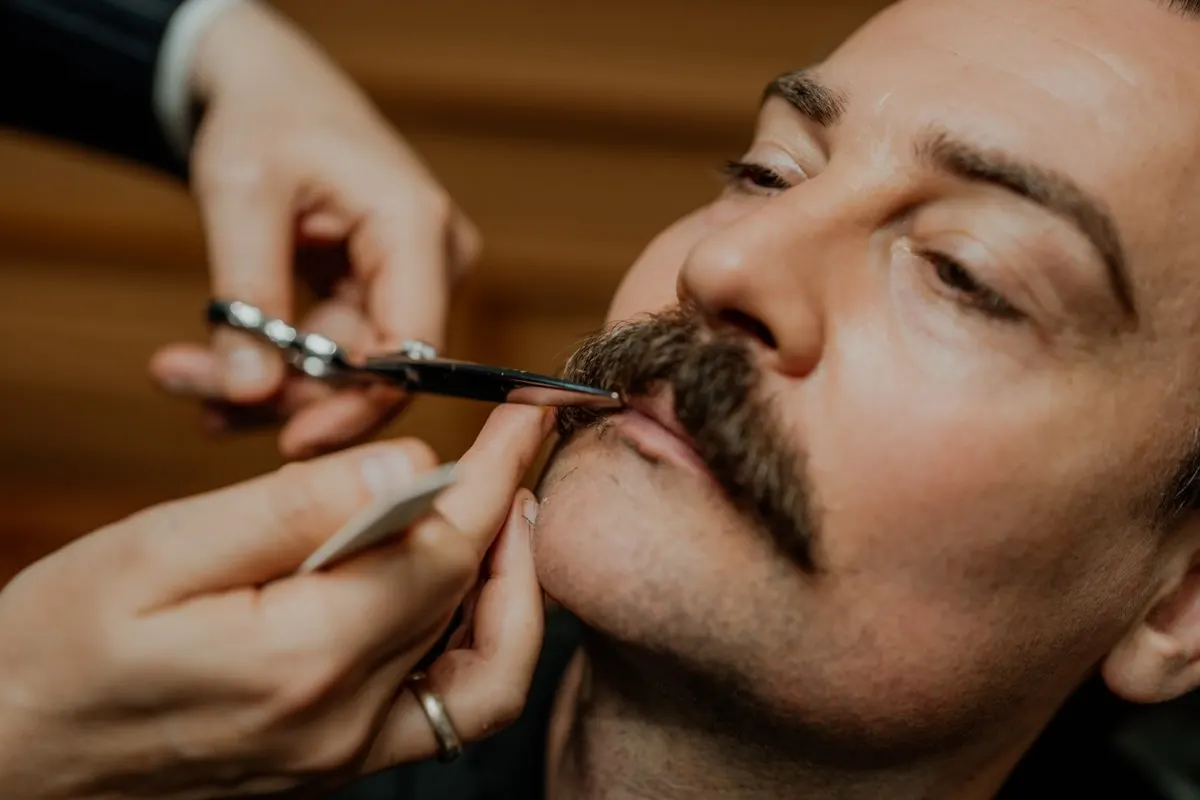
The edge along the upper lip is one place where small adjustments become conspicuous. The hair needs trimming to suit the intended fall while preserving the fullness that supports the shape.
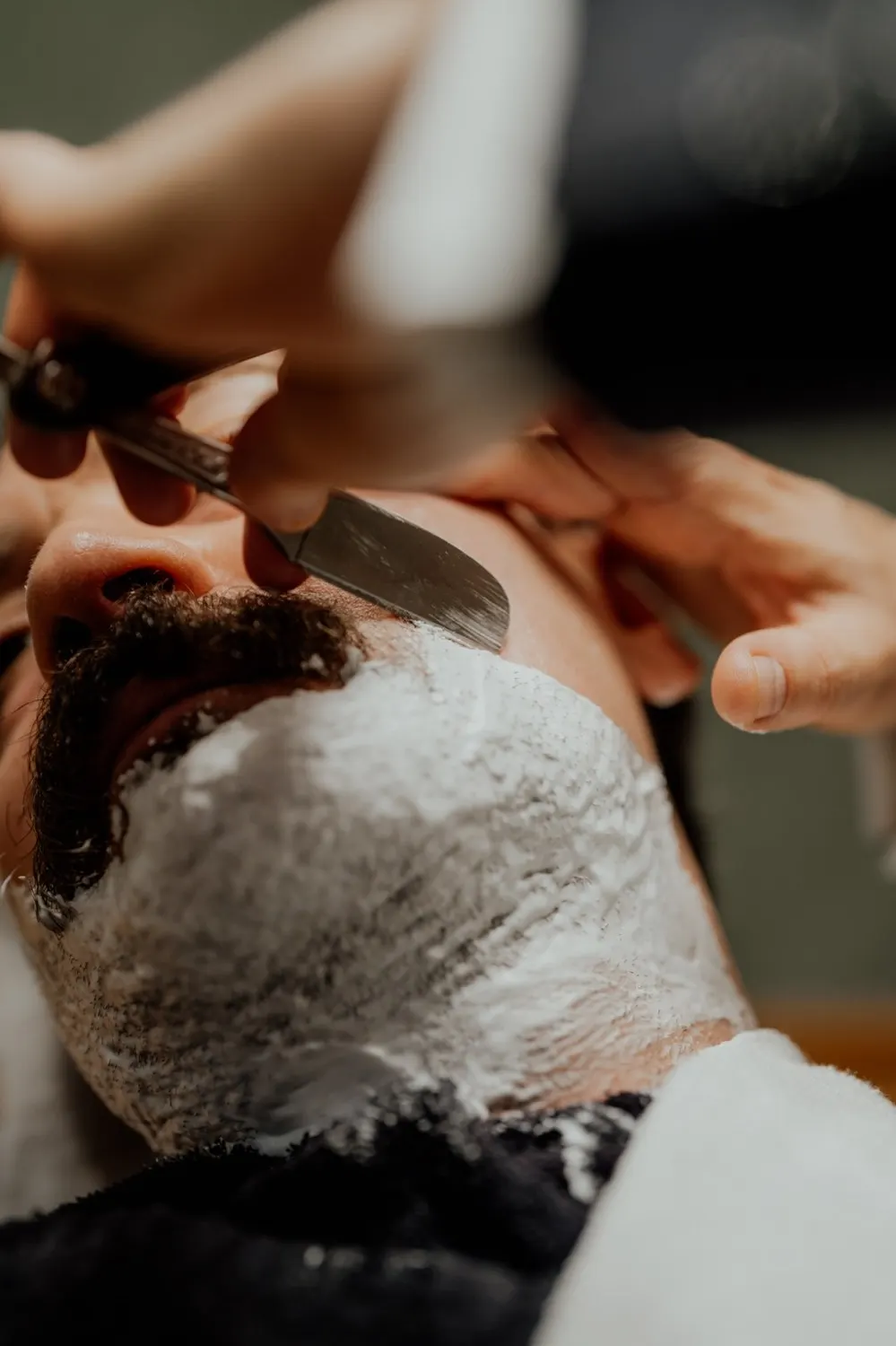
Lind recommends leaving cutting to a barber, particularly while a new style is growing in. It allows the centre and sides to be shaped together without losing length needed for the finished look.
Daily care happens at home
Between trims, the routine is straightforward. Cleanse as needed with a mild beard shampoo, rinse thoroughly and pat dry. The aim is to remove dirt and product residue without leaving the hair and skin feeling dry.
A little beard oil can make the hair more supple. Lind recommends working it in with the fingertips so it also reaches the skin beneath the moustache. Start with a small amount and adjust as needed.
Then use a comb. For width, comb from the centre towards the sides. Daily combing helps arrange the hair in the intended shape. This is sometimes called training a moustache, but it does not change its natural direction of growth.
Moustache styling: wax should support the shape
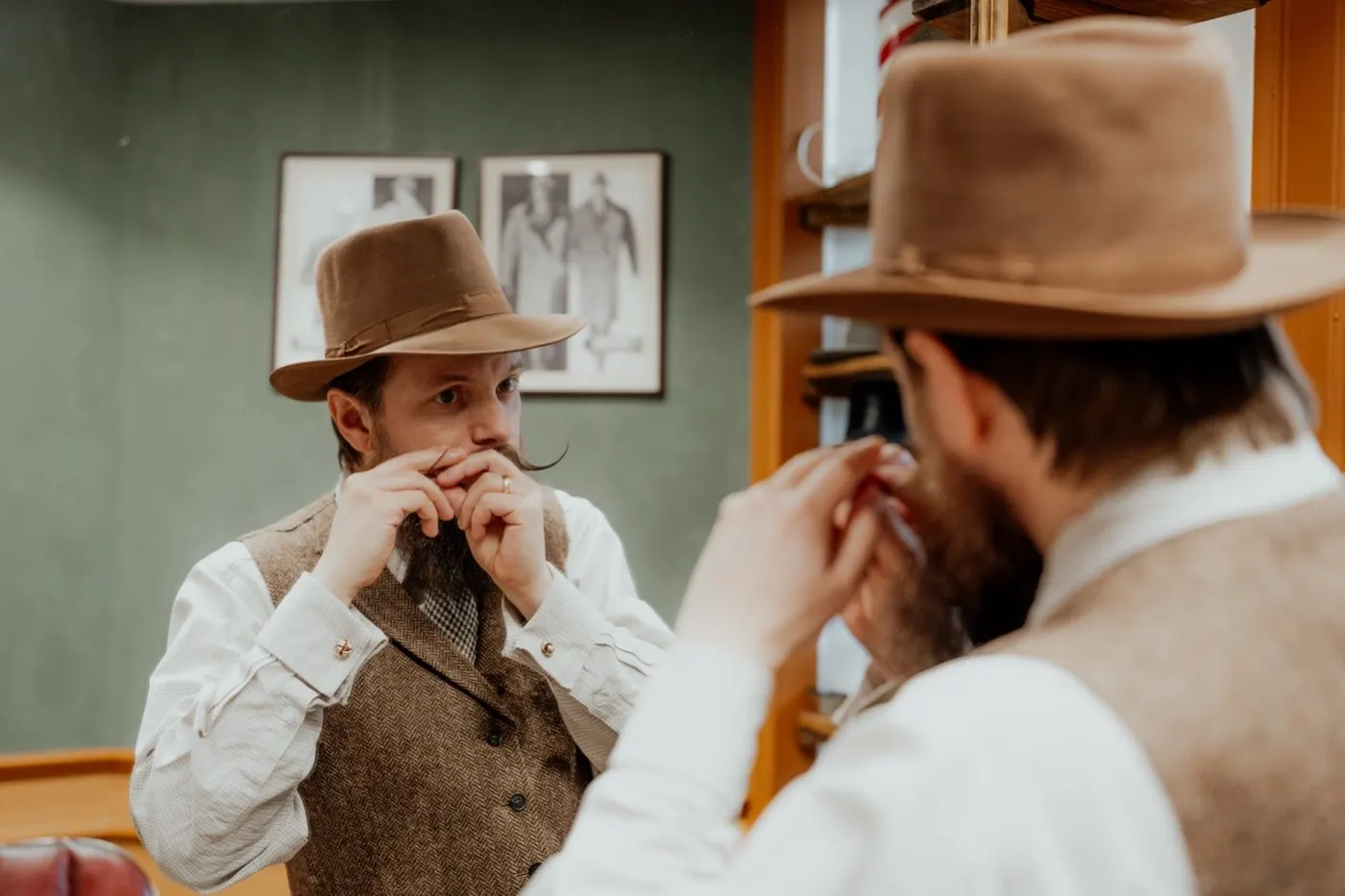
Moustache wax is useful even without curls. A small amount can bring the hair together and settle stray hairs along the lip. Longer tips may need more hold.
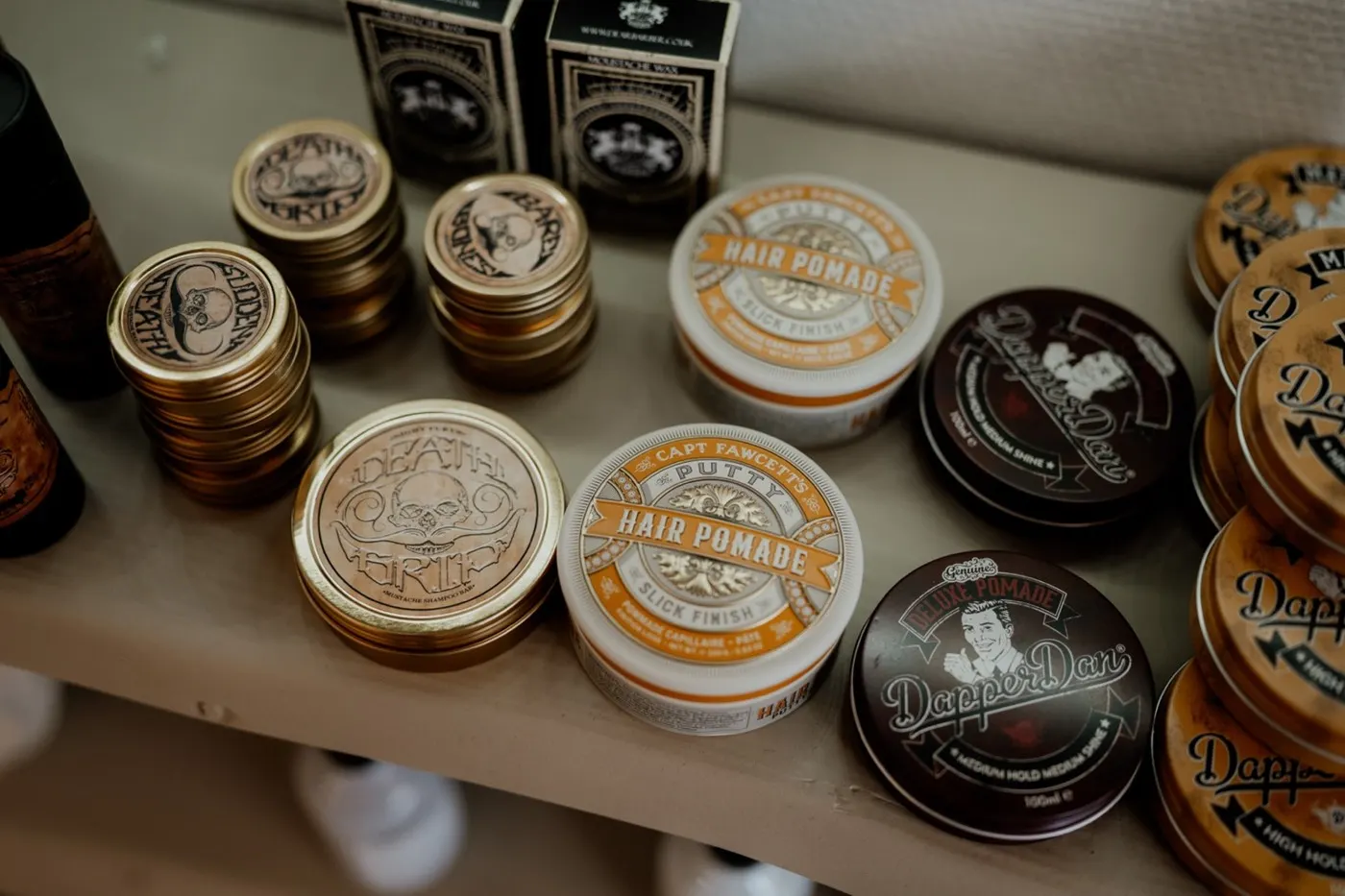
Lind recommends a wax made for moustaches. Start with dry hair and a small amount, softened according to the product instructions. Work it into the hairs that need hold, then shape with a comb or your fingers. For curled tips, gently gather the ends and guide them outwards and upwards.
Too much wax at the outset can make the moustache heavy and stiff. Adding a little more is easier than correcting an excessive first application.
A moustache has to work in everyday life
After eating and drinking, gently remove moisture and food residue with a napkin. Dab or wipe lightly in the direction of the hairs, then adjust with a comb if needed.
A short moustache may need little more than combing between trims. A handlebar usually takes more styling. The most useful routine suits both the hair and the time its wearer wants to spend at the mirror.
The shape develops over time. First comes the length. Then scissors, a comb and wax can give it direction.